 0
0
 0
0
H2: Introduction
Insulin Lispro How to Use: this guide helps you use insulin lispro confidently. You will find clear steps, practical tips, and easy explanations. Also, you will learn safety measures to avoid common mistakes. Whether you are new to insulin or want a refresher, this guide simplifies the process.
Moreover, the guide focuses on real-world scenarios. You will read about pens, syringes, timing, and travel tips. Every section uses plain language and short sentences. As a result, you can follow along easily.
H2: What Is Insulin Lispro?
Insulin lispro is a rapid-acting insulin analog. It starts working faster than regular human insulin. Consequently, it helps control blood sugar spikes after meals. Many people prefer it for mealtime coverage.
Also, manufacturers often sell it under brand names like Humalog and Lyumjev. Doctors prescribe it for type 1 and type 2 diabetes. They may also use it for insulin pumps.
H2: How Insulin Lispro Works
Insulin lispro mimics the body’s natural insulin response after eating. It has a quick onset and a short duration. Typically, it starts working in 10 to 20 minutes and lasts about 3 to 5 hours.
Because it acts fast, you inject it near mealtime. This timing helps match insulin action with food absorption. Thus, you prevent high blood sugar after meals.
H2: Who Should Use Insulin Lispro?
Doctors recommend insulin lispro for people needing rapid mealtime insulin. People with type 1 diabetes use it as part of their basal-bolus regimen. People with type 2 diabetes sometimes add it to control post-meal spikes.
Additionally, hospitals use it for short-term high blood sugar control. However, a healthcare provider must prescribe and adjust insulin doses. Always follow your provider’s directions.
H2: Different Forms and Brands
Insulin lispro comes in several forms. You will find vials, cartridges, and prefilled pens. Also, some versions have slightly different action profiles.
Common brands include:
– Humalog (standard lispro)
– Lyumjev (faster onset, slightly different formulation)
– Generic lispro (in some regions)
H3: Quick Comparison Table: Pens vs. Vials
Below is a simple comparison to help you decide which device suits your life.
| Feature | Prefilled Pen | Vial + Syringe/Cartridge |
|—|—:|—:|
| Convenience | High | Moderate |
| Dosing accuracy | High | Variable |
| Portability | Very good | Good |
| Cost | Higher per dose | Often lower per dose |
| Waste | Less | More (syringes) |
| Ideal for | On-the-go living | Home use and custom doses |
H2: Before You Start: Supplies You Need
Gather supplies before injecting insulin lispro. This step saves time and reduces errors. Common items include:
– Insulin lispro pen or vial
– New sterile syringe or needle (if using vial)
– Alcohol swabs
– Sharps container
– Blood glucose meter and strips
– Fast-acting glucose source for low blood sugar
Also, carry snacks and a glucagon kit if your provider prescribes one. Finally, keep a logbook or app to track doses and readings.
H2: How to Prepare Insulin Lispro for Injection
Prepare insulin lispro carefully to keep it effective. First, check the insulin label and expiry date. Then, inspect the liquid. It should be clear and free of particles. Discard cloudy or discolored insulin.
If you use a pen, gently roll it between palms only if instructed. Do not shake rapidly. Next, prime the pen to remove air bubbles. Dial a small dose and press the injection button until insulin appears. This step ensures accurate dosing.
H3: Preparing a Vial and Syringe
When using a vial, wash your hands first. Clean the vial top with an alcohol swab. Draw air into the syringe equal to your dose. Inject air into the vial. Then, invert the vial and draw the dose. Remove air bubbles before injecting.
Always use a new sterile needle for each injection. Reuse can cause infection and dull needles. Therefore, change needles as recommended.
H2: Timing: When to Inject Insulin Lispro
Timing matters with insulin lispro. Because it works fast, you should inject it within 15 minutes before eating. Some people inject immediately before a meal. Others inject up to 20 minutes after eating if needed.
Also, follow your provider’s advice based on your blood sugar patterns. For example, if you experience high post-meal numbers, you might inject slightly earlier. Conversely, if you often have lows, you might inject closer to the meal.
H2: Choosing Injection Sites
Insulin lispro absorbs differently depending on the site. Common injection sites include:
– Abdomen (best for fastest absorption)
– Upper arms
– Thighs
– Buttocks (slower absorption)
Rotate injection sites systematically to avoid lipohypertrophy. Use a different spot at least one inch away from the last injection. Also, keep a rotation chart to track sites.
H3: Technique for Subcutaneous Injection
Follow these simple steps:
1. Clean the injection site with an alcohol swab.
2. Pinch a fold of skin if needed.
3. Insert the needle at a 90-degree angle for most people.
4. Press the plunger slowly until the dose finishes.
5. Hold the needle in place 5 to 10 seconds.
6. Withdraw the needle and dispose of it safely.
If you are thin, use a 45-degree angle. Consult your provider for personalized guidance.
H2: Using Insulin Pens: Step-by-Step
Insulin pens offer ease and accuracy. Here is a typical routine:
– Wash your hands.
– Check the insulin and pen label.
– Attach a new needle.
– Prime the pen to clear air.
– Set the dose.
– Inject as directed.
– Replace the outer needle cap and dispose of the needle.
Pens come in two types: disposable and reusable. Follow the manufacturer’s instructions for each. Also, store pens according to the label.
H2: Using Vials and Syringes: Step-by-Step
Vials require a little more technique. Follow these steps:
– Wash your hands and clean the vial top.
– Pull air into the syringe equal to your dose.
– Inject air into the vial.
– Draw the correct dose.
– Remove air bubbles.
– Inject subcutaneously.
– Dispose of the syringe in a sharps container.
Practice with a trained professional until you feel confident. Also, double-check doses to prevent mistakes.
H2: Insulin Lispro Dosage: How Much to Take
Your provider determines insulin lispro doses. They may use carbohydrate counting or fixed dosing. For carbohydrate counting, you match insulin to grams of carbs. For example, your insulin-to-carb ratio might be 1 unit per 10 grams of carbs.
Initially, doctors start with conservative doses. Then, they adjust based on blood glucose readings. Importantly, do not change doses without medical advice.
H3: Typical Dose Adjustments
Providers adjust mealtime insulin for:
– High post-meal blood sugars
– Low blood sugar events
– Changing activity levels
– Illness or stress
Adjustments occur gradually. For instance, you might change by 1 to 2 units at a time. Always log changes and discuss them with your provider.
H2: Monitoring Blood Sugar with Insulin Lispro
Monitoring guides safe insulin use. Check blood sugar before meals and sometimes two hours after. Also, test at bedtime and during symptoms of low or high blood sugar. Continuous glucose monitors (CGMs) help many people detect trends.
Keep a detailed log of readings, doses, and meals. Review records with your care team. They will fine-tune your dosing and timing.
H2: Managing Hypoglycemia (Low Blood Sugar)
Low blood sugar can happen with insulin use. Recognize common symptoms: shakiness, sweating, confusion, and dizziness. Treat lows quickly to prevent worsening.
Use 15 grams of fast-acting carbs, such as:
– 4 glucose tablets
– 4 ounces (120 ml) fruit juice
– 1 tablespoon sugar or honey
Wait 15 minutes and recheck blood sugar. Repeat treatment if still low. Once levels return to normal, eat a small snack if the next meal is not soon.
H2: Managing Hyperglycemia (High Blood Sugar)
High blood sugar can indicate underdosage or missed insulin. Check your blood sugar and look for ketones if levels are very high. Drink water to stay hydrated. Also, follow sick-day guidelines from your provider.
If your blood sugar remains high despite correction, call your healthcare team. They may suggest temporary dose adjustments or tests.
H2: Side Effects and What to Watch For
Insulin lispro’s most common side effects include:
– Low blood sugar (hypoglycemia)
– Injection-site reactions
– Weight gain in some individuals
Less commonly, allergic reactions can occur. Seek immediate attention for severe swelling, rash, or breathing difficulties. Also, report persistent skin changes at injection sites.
H2: Preventing Injection Site Issues
Rotate injection sites regularly to prevent lumps and scarring. Avoid injecting into areas with lipohypertrophy. These areas can change insulin absorption. Instead, choose healthy skin that is clean and intact.
If you notice lumps or dents, consult your provider. You may need a new rotation plan. Also, use correct needle length to reduce tissue trauma.
H2: Storage and Handling
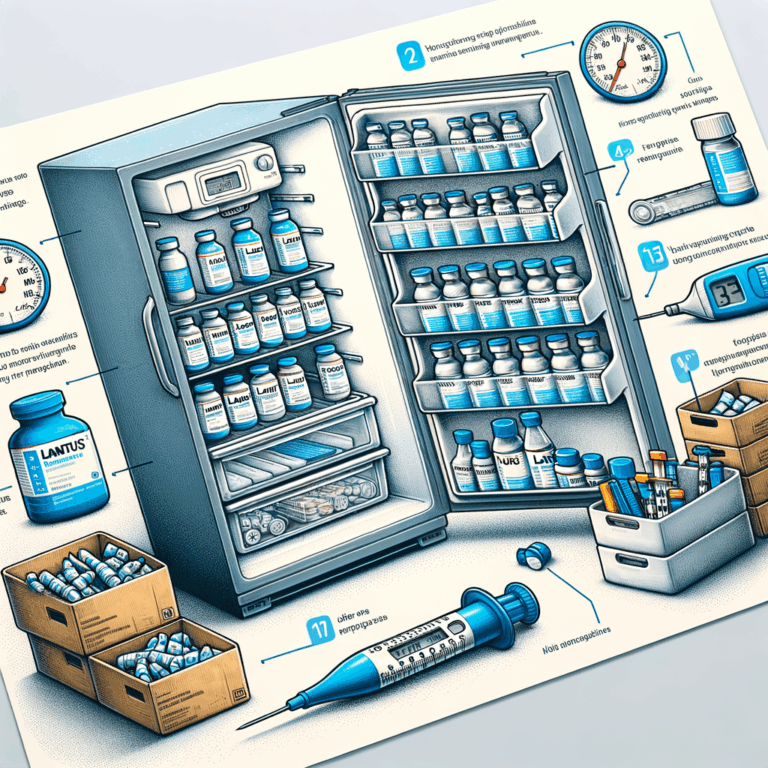
Store unopened insulin lispro in the refrigerator between 36°F and 46°F (2°C to 8°C). Do not freeze it. Once opened, most pens and vials last 28 days at room temperature. However, check the product label for exact guidance.
Avoid storing insulin in direct sunlight. Also, keep it away from extreme heat. When traveling, use insulated cases or cooler packs.
H3: Travel Tips for Insulin Lispro
Carry a copy of your prescription and a letter from your provider. Keep insulin in your carry-on bag during flights. Do not store insulin in checked luggage. Also, be prepared for security screening. Inform TSA agents if you carry insulin syringes or pens.
When crossing time zones, review your dosing schedule with your provider. They will help you adjust timing safely.
H2: Special Populations: Children, Pregnancy, and Older Adults
Children can use insulin lispro safely under medical supervision. Providers tailor doses carefully based on weight and carb intake. Parents often learn to calculate doses and manage hypoglycemia.
Pregnant people with diabetes may use insulin lispro. However, providers choose insulin plans that optimize fetal health. They monitor blood sugar frequently and adjust doses often.
Older adults may have different needs due to kidney function, vision, or cognitive issues. Care teams may simplify regimens and emphasize safety.
H2: Insulin Lispro and Insulin Pumps
Many people use insulin lispro in pumps. Its rapid action suits pump therapy. Pumps deliver continuous basal insulin and boluses for meals. You program doses based on carb intake and current blood sugar.
Change infusion sets regularly to prevent infection. Also, monitor glucose closely after pump changes or when sick.
H2: Common Mistakes to Avoid
Avoid these frequent errors:
– Skipping the priming step on pens
– Injecting cold insulin, which can hurt and reduce absorption
– Reusing needles
– Injecting into the same spot repeatedly
– Changing doses without professional guidance
Also, avoid mixing insulin lispro with longer-acting insulins in the same syringe unless your provider tells you to. Always follow the product instructions.
H2: Practical Tips for Daily Life
Plan meals and snacks with your insulin schedule in mind. Keep glucose tablets or juice handy. Use smartphone apps to log meals and doses. Also, wear medical identification if you use insulin regularly.
When eating out, estimate carbohydrates ahead of time. Ask servers about ingredients and portion sizes. Finally, involve family or caregivers in your diabetes plan.
H3: Tips for Physical Activity
Exercise lowers blood sugar and increases insulin sensitivity. Therefore, you may need to reduce insulin doses before activity. Also, carry carbs during workouts to treat potential lows. Speak with your provider to create an exercise-adjusted plan.
H2: When to Call Your Healthcare Provider
Call your provider if you:
– Have frequent low blood sugars
– See persistent high readings despite dose changes
– Notice unexplained weight loss
– Get signs of infection at injection sites
– Cannot tolerate food or insulin due to illness
Prompt contact helps prevent complications and guides safe adjustments.
H2: Legal and Safety Considerations
Only use insulin lispro prescribed to you. Never share insulin or needles with others. Also, follow local laws for disposing of sharps. Many pharmacies and clinics accept sharps disposal.
Document your doses and blood sugars. This record protects you legally and medically in emergencies.
H2: Common Myths About Insulin Lispro
Myth: Insulin causes diabetes to worsen. Fact: Insulin treats high blood sugar and prevents complications. It does not cause diabetes.
Myth: Injecting insulin early will always prevent highs. Fact: Timing depends on meal composition and individual response. Adjust with your provider’s help.
H2: Summary and Key Takeaways
Insulin lispro acts fast and suits mealtime coverage. You can use pens or vials based on preference. Always prepare, prime, and inject correctly. Monitor blood sugar, treat lows quickly, and rotate sites to avoid complications.
Finally, communicate with your healthcare team. They will personalize dosing and help with problems. With practice, insulin lispro becomes part of your routine.
H2: Frequently Asked Questions (FAQs)
Q1: Can I mix insulin lispro with other insulins in one syringe?
A1: Generally, avoid mixing unless your provider approves. Mixing can change action profiles. Follow manufacturer guidance.
Q2: How soon should I eat after injecting insulin lispro?
A2: Usually, eat within 15 minutes after injection. Some people eat immediately. Consult your provider if you have frequent lows.
Q3: Can I use expired insulin lispro in an emergency?
A3: Do not use expired insulin routinely. In dire emergencies, consult medical help first. Efficacy may be reduced.
Q4: How does illness affect my insulin lispro dose?
A4: Illness often raises blood sugar. You may need higher doses. Contact your provider for a sick-day plan.
Q5: Can I inject insulin lispro into a muscle?
A5: Avoid intramuscular injection. Muscle injections change absorption and can cause pain. Use subcutaneous technique only.
Q6: How long can a pen with insulin lispro be used after opening?
A6: Many pens last 28 days at room temperature after opening. Check the pen’s label for exact limits.
Q7: Are there foods that interact with insulin lispro?
A7: No direct interactions exist. However, high-carb meals require more insulin. Alcohol can cause lows. Balance intake with dosing.
Q8: How do I adjust insulin lispro for alcohol use?
A8: Alcohol can cause delayed hypoglycemia. Consider smaller doses or have carbs available. Discuss individualized plans with your provider.
Q9: Can I inject insulin lispro into scarred or tattooed skin?
A9: Tattoos may be acceptable if skin is healthy. Avoid scarred or lumpy areas. Rotate sites for better absorption.
Q10: Will insulin lispro cause weight gain?
A10: Insulin can promote weight gain in some people. Managing calories and activity helps reduce this risk.
H2: Additional Questions You Might Have
Q11: How does dehydration affect insulin lispro?
A11: Dehydration can concentrate blood sugar and affect insulin needs. Stay hydrated and check glucose more often.
Q12: Can I use insulin lispro with continuous glucose monitoring?
A12: Yes. CGMs work well with insulin lispro. They help fine-tune dosing and detect trends.
Q13: What should I do if my child refuses injections?
A13: Work with your care team for behavioral strategies. Use distraction, rewards, and gradual exposure. Professional support can help.
Q14: Are there smartphone apps recommended for tracking insulin lispro?
A14: Many apps track carbs, doses, and glucose. Ask your provider for suggestions that integrate with your devices.
H2: References
– Humalog (insulin lispro) Prescribing Information. Eli Lilly. https://www.accessdata.fda.gov/drugsatfda_docs/label/2020/020150s061lbl.pdf
– Lyumjev (insulin lispro-aabc) Prescribing Information. Eli Lilly. https://www.accessdata.fda.gov/drugsatfda_docs/label/2020/212512s000lbl.pdf
– American Diabetes Association. Standards of Medical Care in Diabetes—2024. https://diabetesjournals.org/care/article/47/Supplement_1/S1/153530/Standards-of-Care-in-Diabetes-2024
– Mayo Clinic. Insulin types: How they differ. https://www.mayoclinic.org/diseases-conditions/diabetes/in-depth/insulin/art-20045212
– Centers for Disease Control and Prevention. Insulin Storage and Handling. https://www.cdc.gov/diabetes/library/spotlights/insulin-storage.html
– Diabetes UK. Injection sites for insulin. https://www.diabetes.org.uk/guide-to-diabetes/manage-your-diabetes/insulin/injection-sites
If you want, I can create an easy printable checklist for injections and a rotation chart. Would that help you feel more prepared?


About the Author